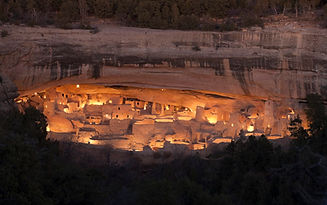
Mesa Verde National Park
I thought my trip in Colorado was going to be all about the Rocky Mountains, a perfect ski resort, and rafting. I’m the type of person who despises canyons and loves snow way too much. I don’t care if a snow blizzard comes—I’ll still be out there enjoying it, probably building a snowman while the weather tries to freeze me into a popsicle, while everyone else goes full Bear Grylls mode trying to survive. Believe me, I’ve done that several times before. Snow is life. Canyons? Not so much. Dry, dusty, hot canyons are basically nature’s idea of a bad joke. Global warming = no nature. Living proof mother nature basically hates us.
Like always, it was a normal day preparing to leave our ski resort in Winter Park—beautiful place, by the way (not an ad). My brother and I did our usual routine of taking pictures of the room, trying to capture memories in every corner: the balcony with its frosted view, the ski racks that smelled faintly like wax and adventure, even the tiny mug that said “Winter Park or bust.” But today felt different. Leaving the snow hit me harder than usual. Maybe it was the glimmering mountains, maybe it was the thought that my snow paradise was behind me forever going back to Texas, same old same old… or maybe I was just being dramatic.
We packed up the car and started our drive to Mesa Verde National Park in southern Colorado. The contrast was brutal—from snow-topped mountains to dry, heartless canyons, it was like stepping into a different planet. I half expected tumbleweeds to start rolling by like in a spaghetti western. The excitement that had carried me through ski slopes and snowball fights started fading fast.
After what felt like forever, we finally arrived.
I saw nothing.
Where is the attraction? Where is the nature?
Did we get scammed… like when people hype something up to be amazing, and it turns out it looks exactly like that one Breaking Bad scene—empty, harsh, and suspiciously similar to where the Zodiac Killer would, hid his bodies?
I was about to grumble when suddenly, like a total superhero, a park ranger appeared. Oh this was no ordinary ranger—he looked like he’d saved a thousand kids who wanted to jump off cliffs, wrestled bears in his free time, and maybe climbed Everest for fun on weekends. His confidence screamed I know what I’m doing, and his grin whispered you’re about to survive this adventure.
He guided us to a tour, and I thought to myself, “Oh great. Another hike. This is going to be fun, said no one ever.”
But something about this hike felt different immediately. The path was raw and rugged, unpaved, with no barricades. And most importantly… a ladder. A vertical ladder. I could see my brother laughing and my mom crying. I laughed nervously. “This is going to be a fun family bonding moment… or the death of me watching my mom panic and end up in the "Utah Situation!" Dun Dun Dunn!
As we progressed, we entered what looked like a man-made cave. A hole in the wall caught my attention—it was too clean, too precise to be natural. That’s when the ranger stopped us.
“This is not a cave,” he said. “This is a city.”
My jaw dropped to the floor.
And just like always my parents slowly appear behind me taking pictures, my dad acting like that one blogger who basically glued his camera to his hands!
He said it was made by the Pueblo tribe. The ladder we used? That was how they accessed the plateau to farm. And the water—how did they survive here? The ranger explained: the Rocky Mountains fed water into this desert landscape. Ingenious. Vital. Life-giving.
From the carved hole, I could see the Rockies again, snow-dusted and majestic. I felt a rush of happiness, almost like seeing an old friend after a long absence. Then the guide explained something that blew my mind even further: the Rocky Mountain Range had originally been a canyon, which over centuries, through erosion and weather, had transformed into the tundra we’d just left.
As we explored further, the structures became more unbelievable. Two-story buildings carved into the cliffs, surprisingly spacious interiors, and hidden passageways. Every detail screamed planning, ingenuity, and survival skill. The Pueblo people had created a system that allowed them to live, hide, farm, and thrive in one of the harshest environments imaginable.
My mom struggled up a ladder, gasping like she’d just run a marathon, and I quietly laughed while trying not to make eye contact—she deserved a medal. My brother, of course, was pretending to be a professional climber while my dad took selfies from dangerous angles. And me? I was overjoyed because the view made the whole canyon adventure feel like a roller coaster for my brain.
The canyon wasn’t just rock and dirt—it was history, ingenuity, and life carved into the cliffs. Every ladder, every opening, every small water channel told a story of humans who had survived, adapted, and created beauty in the middle of nowhere.
And in that moment, I realized: what I thought was a disappointment was actually a hidden treasure.
I learned something that day: snow might be my paradise, but adventure—even dusty, canyon-filled, sun-baking adventure—is worth it when you have the right guide, a little courage, and maybe a park ranger who looks like a superhero.
And just like that another location was magical!
Did we get scammed… like when people hype something up to be amazing, and it turns out it looks exactly like that one Breaking Bad scene—empty, harsh, and suspiciously similar to where the Zodiac Killer would, hid his bodies?
I was about to grumble when suddenly, like a total superhero, a park ranger appeared. Oh this was no ordinary ranger—he looked like he’d saved a thousand kids who wanted to jump off cliffs, wrestled bears in his free time, and maybe climbed Everest for fun on weekends. His confidence screamed I know what I’m doing, and his grin whispered you’re about to survive this adventure.
He guided us to a tour, and I thought to myself, “Oh great. Another hike. This is going to be fun, said no one ever.”
But something about this hike felt different immediately. The path was raw and rugged, unpaved, with no barricades. And most importantly… a ladder. A vertical ladder. I could see my brother laughing and my mom crying. I laughed nervously. “This is going to be a fun family bonding moment… or the death of me watching my mom panic and end up in the "Utah Situation!" Dun Dun Dunn!
As we progressed, we entered what looked like a man-made cave. A hole in the wall caught my attention—it was too clean, too precise to be natural. That’s when the ranger stopped us.
“This is not a cave,” he said. “This is a city.”
My jaw dropped to the floor.
And just like always my parents slowly appear behind me taking pictures, my dad acting like that one blogger who basically glued his camera to his hands!
He said it was made by the Pueblo tribe. The ladder we used? That was how they accessed the plateau to farm. And the water—how did they survive here? The ranger explained: the Rocky Mountains fed water into this desert landscape. Ingenious. Vital. Life-giving.
From the carved hole, I could see the Rockies again, snow-dusted and majestic. I felt a rush of happiness, almost like seeing an old friend after a long absence. Then the guide explained something that blew my mind even further: the Rocky Mountain Range had originally been a canyon, which over centuries, through erosion and weather, had transformed into the tundra we’d just left.
As we explored further, the structures became more unbelievable. Two-story buildings carved into the cliffs, surprisingly spacious interiors, and hidden passageways. Every detail screamed planning, ingenuity, and survival skill. The Pueblo people had created a system that allowed them to live, hide, farm, and thrive in one of the harshest environments imaginable.
My mom struggled up a ladder, gasping like she’d just run a marathon, and I quietly laughed while trying not to make eye contact—she deserved a medal. My brother, of course, was pretending to be a professional climber while my dad took selfies from dangerous angles. And me? I was overjoyed because the view made the whole canyon adventure feel like a roller coaster for my brain.
The canyon wasn’t just rock and dirt—it was history, ingenuity, and life carved into the cliffs. Every ladder, every opening, every small water channel told a story of humans who had survived, adapted, and created beauty in the middle of nowhere.
And in that moment, I realized: what I thought was a disappointment was actually a hidden treasure.
I learned something that day: snow might be my paradise, but adventure—even dusty, canyon-filled, sun-baking adventure—is worth it when you have the right guide, a little courage, and maybe a park ranger who looks like a superhero.
And just like that another location was magical!