
Rocky Mountain National Park: Our Trip Up Trail Ridge Road
Updated: Jul 14

Rocky Mountain National Park was a totally different kind of trip than the beach stuff we usually do way more mountains, way more elk, and one road that genuinely felt like driving into the clouds. Here's how it went.
Good to Know (Quick Reference)
Entrance fee: $30 per vehicle, valid for 1 day ($35 for 7 days)
Trail Ridge Road: Only open seasonally, usually late May through mid-October depending on snow check conditions before you go, because it closes fast if weather rolls in
Elevation: Trail Ridge Road is the highest continuous paved road in the U.S., topping out over 12,000 feet altitude sickness is a real thing up there, so drink way more water than you think you need
What to bring: Layers. Even in summer it can be warm at the base and near-freezing at the higher overlooks
Wildlife distance: Stay at least 25 yards back from elk (100 yards from any bears) they look calm but they're still wild animals
Best time to visit: Early morning for wildlife, since that's when elk and other animals are most active and out in the open
Our Rocky Mountain Itinerary
Driving Trail Ridge Road Through Alpine Bear Pass
This was the main event of the whole trip, and honestly, one of the most beautiful scenic drives I've ever been on. Trail Ridge Road climbs up and over the Continental Divide through Alpine Bear Pass, and the higher we got, the more the trees thinned out until it was just rock, sky, and these huge open views in every direction. At the top, we were literally above the treeline nothing but tundra and clouds that looked close enough to touch.
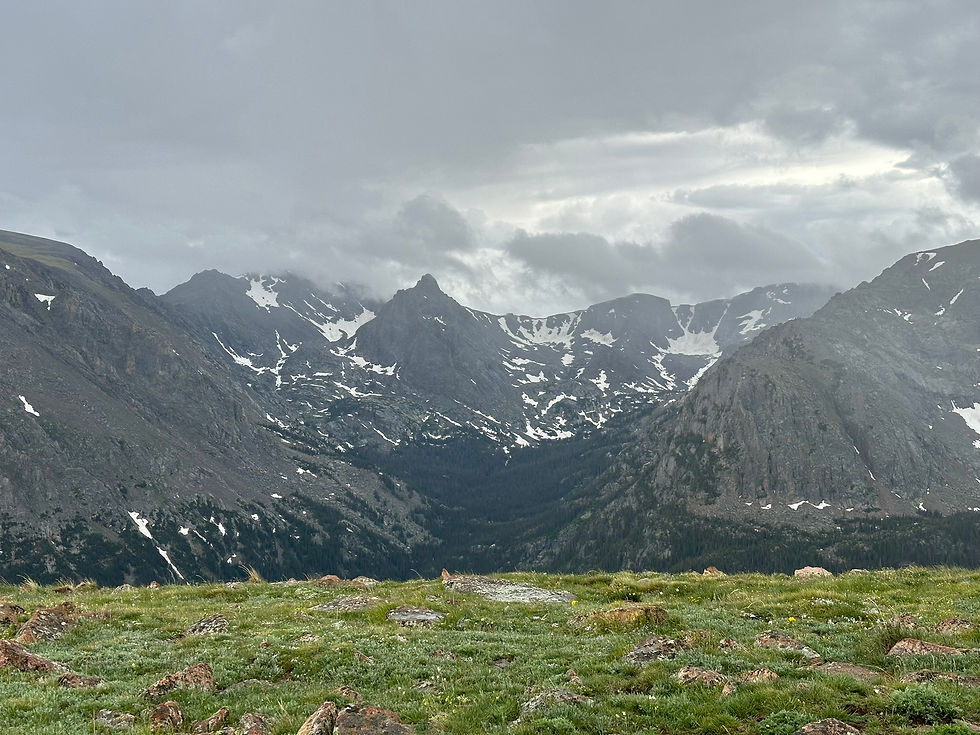
Here's the thing nobody tells you: it gets cold up there. Like, actually cold. I completely forgot to bring a jacket, thinking it was still summer down at the base, and by the time we got out of the car at one of the overlooks it was around 30 degrees with wind on top of that. I basically stood there shivering in a t-shirt, regretting every life choice that led to that moment, while everyone else who'd actually packed a jacket looked perfectly fine. Lesson learned the hard way: always bring a jacket, even in July, even if it's 80 degrees at the entrance.
We stopped at a bunch of the overlooks along the way, and every single one had a different view valleys, distant peaks still holding onto snow, that kind of endless mountain-after-mountain look that doesn't really translate to photos as well as you'd hope.
Wildlife Along the Way
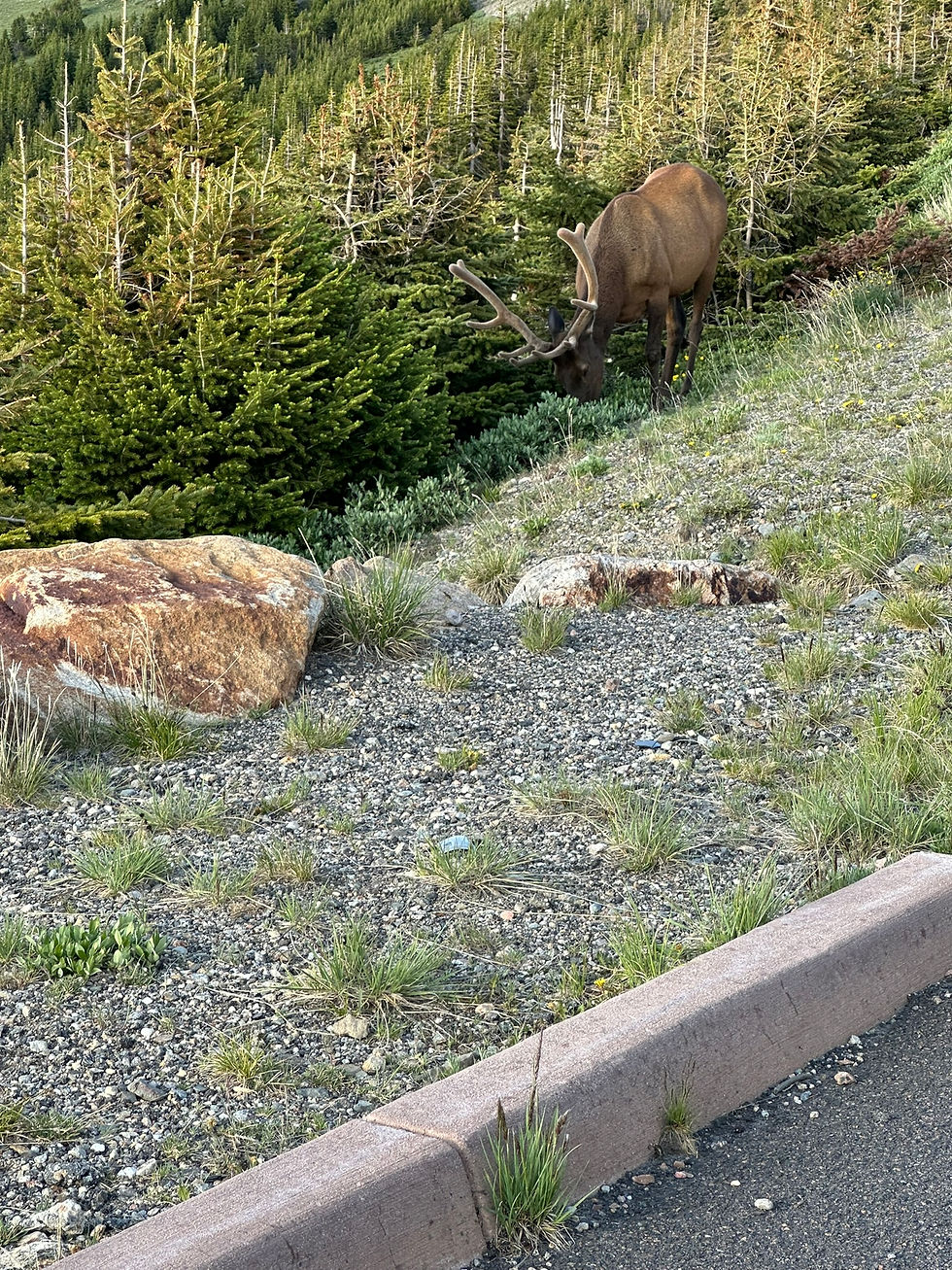
We got lucky with animal sightings all over the park an elk grazing calmly in a ramp, completely unbothered by the line of cars that had pulled over to watch, a deer picking its way through the brush close enough to get a clear shot, and even a couple of quieter moments where an elk just stood there in the open, staring back at us like it owned the place. It's one thing to see this stuff on a nature documentary and a totally different thing to be a few dozen yards away watching it happen in real time, with those huge mountains sitting right behind them the whole time.
A Stop at the Lake
One of the calmest parts of the trip was stopping at one of the alpine lakes the water was so still it was basically a mirror, reflecting the mountains and the sky almost perfectly. We just sat there for a while, not really doing much, just taking it in. After the drive up Trail Ridge Road, it was the perfect slow-down moment.
What to Bring
Learn from my mistake the base of the park and the top of Trail Ridge Road can feel like two completely different seasons on the same day.
Summer (visiting the lower elevations):
T-shirts and shorts for the warm afternoons
A light rain jacket mountain weather can turn fast, even in July
Sunscreen and a hat, since the sun feels stronger at altitude
Sturdy hiking shoes for any trails
A reusable water bottle staying hydrated matters more up here than you'd think
Winter (or anywhere above the tree line, any time of year):
A real jacket, not just a hoodie temperatures at higher elevations can sit in the 30s or lower even when it's warm down below
Gloves and a hat, especially if you're stopping at overlooks for photos
Layers you can add or peel off, since the temperature swings a lot as you gain elevation
Warm socks and boots if there's any snow on the ground, which happens even in summer at the highest points
Seriously pack the jacket even if the forecast looks warm. I didn't, and I paid for it standing at that overlook, freezing, while everyone else was fine.
Where to Stay
Estes Park: The main gateway town on the east side of the park most people base here, and it's got the most restaurants, shops, and lodging options.
Grand Lake: The quieter option on the west side, if you want a smaller-town feel and easier access to Trail Ridge Road from the other direction.
Final Thoughts
Rocky Mountain National Park hits different than a beach trip less lounging around, more "whoa" moments out the car window. Between Alpine Bear Pass, the elk, and that lake, this was one of those trips where every stop felt like its own separate adventure.


Comments